

A new oil pipeline to British Columbia is high on the list of projects that Prime Minister Mark Carney's government will deem to be of national importance, according to multiple news reports.
"I would think given the scale of the economic opportunity, the resources we have, the expertise we have, that it is highly, highly likely that we will have an oil pipeline that is a proposal for one of these projects of national interest," Carney told Reuters Saturday.
"I am confident that my government will do everything we can so that those projects can be built," he added. "The private sector is going to drive it... We've got legislation, but we've also got the people in place at the federal level who can get things done."
Along with a new pipeline, the Calgary Herald cites the technically and economically tenuous Pathways Alliance carbon capture and storage hub in northern Alberta as a likely winner.
"Both ideas have the backing of Alberta Premier Danielle Smith and industry leaders, who want to see increased transportation capacity in the future to move Western Canadian oil to the B.C. coast for export," the Herald writes.
"I'm pleased to see the prime minister is treating this seriously," said Tristan Goodman, president of the Explorers and Producers Association of Canada. "It basically gives a signal to international investors that this is a place they can continue to invest."
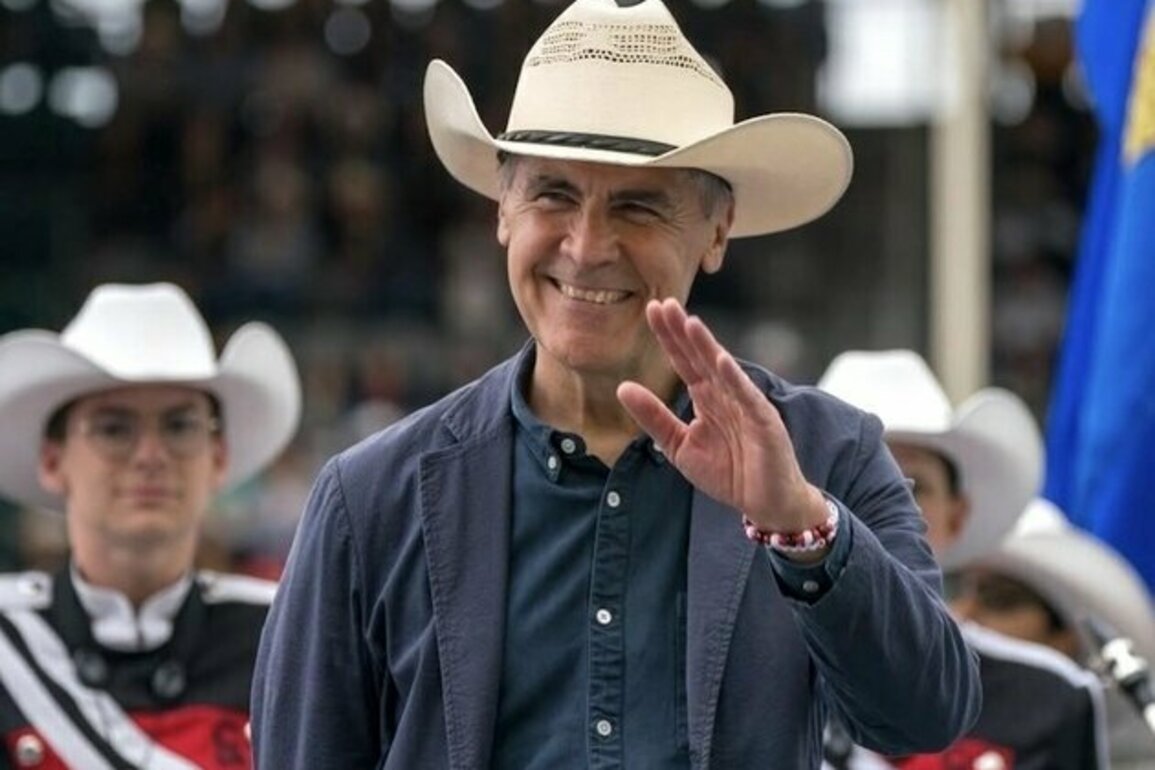
Speaking during a visit to the Calgary Stampede, Carney said project proponents are "rolling up their sleeves" after concluding the government is serious about new fossil fuel megaprojects.
"We've moved over the course of the last few months from people talking about it conceptually to starting to get more concrete. It's not all the way there. There's not a specific proposal in front of us right now," he said. "I understand why that's the case, given the history of the last few years. But my sense is there's real momentum moving, and that's very encouraging."
Anna Johnston, staff lawyer at West Coast Environmental Law, warned that the contentious One Canadian Economy Act, previously Bill C-5, gives the government two pathways to circumvent environmental laws: by designating a single Cabinet minister to issue all project approvals, or by simply exempting a project from applicable laws.
In the first case, "with this wave of a pen, any prerequisites for getting those authorizations under other laws are deemed to have been met," Johnston told The Hill Times. In the second, Cabinet "can make regulations saying that certain laws just don't apply to the project at all."
Instead, she urged the government to consult the public to define what "national interest" means in relation to the major projects on its agenda.
"I think the first order of business is to convene a national conversation about what it means to be in the national interest. This can't be a definition that governments and [project] proponents alone come up with. We're still a democracy. This is an important moment in our time," she said.
"We could have that conversation over the summer, figure out what national interest looks like in 2025 for Canadians, and then come up with that definition and some actual criteria for how projects are qualified."
But the government's process may be moving faster than that. On Monday, the Financial Post reported that the initial list of priority projects will include five categories, titled Western and Arctic Corridor, the Eastern Energy Partnership, Critical Minerals Pathways, the Next Stage of Nuclear, and Export Diversification Infrastructure. Those areas "were among those discussed and flagged as areas of common ground during a first ministers' meeting in June," the Post says, citing an unnamed source.
"We need to sort of go away and talk to the provinces and territories again, talk to Indigenous partners and Indigenous people," the source said. "That's super important and that's a priority in July. You'll see the PM is setting up summits with rights holders."
The Post has initial details on the five priority areas, with each of them likely including multiple major projects.
Source: The Energy Mix