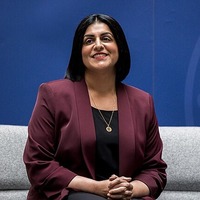


In September, members of the Green Party of British Columbia voted in Victoria climate activist Emily Lowan as their new leader. The 25-year-old vows to "fight the oligarchs" and tax the rich to "fund the future.
Since her victory, Lowan has joined B.C. General Employees' Union public service workers on the picket lines, supporting their push for wage increases. She's called out B.C.'s governing New Democratic Party on social media for its "blatant disrespect" of workers during the negotiations, hasn't shied away from calling the Gaza war a genocide, and has criticized other parties for staying silent on the issue. Like Zack Polanski in the United Kingdom and Zohran Mamdani in New York, Lowan positions herself as part of a new wave of progressives challenging incrementalism and the political establishment with an unapologetic, uncompromising stance.
But Lowan has yet to win a seat in the legislature and faces the uphill task of rebuilding the party after a recent drop in popularity. For now, she's offering "a bold vision for the future," and a political home for those who haven't seen themselves reflected in government.
The Energy Mix Managing Editor Farida Hussain sat down with Lowan to talk about where the Greens stand on their Cooperation and Responsible Government Accord (CARGA)-the power-sharing agreement that allows the NDP to stay in office-and her vision to redefine the BC Greens as a fiery, movement-driven alternative to the governing party.
This interview has been edited for length and clarity.
Congratulations on your victory. Watching from afar, it feels like the start of a new order: You're a younger person entering a majority female legislature once you win a seat. What kind of renewal do you hope to bring in how politics is done in B.C.?
It's a really exciting time, and I think this victory says that British Columbians want a new generation of leadership that has the fire to truly fight for their interests. And it feels like we're at the forefront of a powerful movement to reclaim B.C.'s economy for working people, not billionaires and multinational corporations that are making our lives unlivable and our future bleak.
It's exciting to see the surge of party membership since the campaign. It feels like we've brought new hope to thousands of British Columbians and punched through youth and non-voter apathy with a pretty electrifying message to tackle the rich and powerful in this province. And in the face of rising global fascism, (the) escalating climate emergency and affordability crises, we need to be crystal clear about who is to blame and what must be done.
The unprecedented growth behind my campaign should be a wake-up call to the B.C. NDP that they can't take their progressive voters for granted. Ultimately, I want this party to be the party for workers, the party for renters, the party for young people, and for Indigenous communities across the province who aren't served by the status quo and the establishment parties.
It sounds like the B.C. Greens are the new NDP. Is that a gap you're hoping to fill?
Yeah, I think many moons ago, the B.C. NDP were the party for workers, connected to social and labour movements. I don't think they can say that anymore. When you look at how they've stonewalled public service workers for the last seven weeks in negotiations, when you see how they're bailing out the largest polluters in our province with subsidies.... I think there's been a deep corruption of the B.C. NDP. As they've been in power over the last eight years, every major issue has gotten worse. Life expectancy has gotten worse. We need fiery new leadership that is moving in lockstep with climate, social, and labour movements.
That's reflected in your platform, which is as much about social movements as the environment. You've captured the imagination of young people, but also of some party stalwarts, like founder Adriane Carr, who told CBC News your victory speech "blew her away". But there have also been comments that some of your rhetoric is rather bold. We've seen movements like Occupy Wall Street become a moment, then fade without achieving reform. What's different now?
We're in a unique position, as the B.C. Greens, to hold the balance of power in the next election, and to build so much outside momentum that we force the B.C. NDP on the backfoot in the renegotiation of CARGA. We occupy this unique role where we can help galvanize these movements around the extreme wealth inequality in our province, but also push for clear systemic changes through the agreement. The more we build a sense of political consequence, the greater likelihood we will have to achieve stronger outcomes in those negotiations. I'm looking at things like tax reform, but also proportional representation to ensure every vote counts in B.C.
How has the B.C. government fared so far on CARGA? They've come through on things like heat pump subsidies-what more are you hoping to add to support them?
A lot remains to be seen. In the first year, there were four reviews from independent committees in areas like forestry, health, CleanBC, and the outcomes from those reports will be released in the coming weeks. If there are strong reviews with strong outcomes to implement, the Greens are positioned to really push forward on implementation outcomes. If the reviews are weak, then we'll need to have some harder conversations with the NDP.
The last CARGA did reflect the relative lack of leverage that the B.C. Greens had in the legislature due to seat count. We really need to hold the balance of power in the next election and, hopefully, form a progressive coalition with the NDP again. That's the objective as we grow as a party.
In the past, the B.C. NDP and the Tories have been aligned on issues like Site C and liquefied natural gas infrastructure. Do you worry that the Greens will be sidelined?
I think the Greens occupy a critical role where, with just two seats, we don't need to play the big power politics like the other parties do. I think that'll really benefit us in the next election, with us being bold and unrelenting in our vision at a time when people are deeply fed up with the other party leaders and the status quo. I think I have a real advantage-not being bound by CARGA and by being a non-sitting leader. I'm able to electrify the ground game and the public profile of the party and be more critical, like a watchdog force.
In the past you've criticized the NDP for "negotiating through scarcity and fear." Can you offer some examples of which decisions you were talking about and what the Greens would do differently?
The LNG industry is the biggest example. The previous Premier, John Horgan, really rolled over in negotiations with LNG Canada and offered a $6-billion package to phase one of the project. The industry will likely expect a similar thing from phase two. He was unwilling to protect taxpayer dollars in negotiations with industry. And you know, we have many examples of just how captured B.C. politicians are by the fossil fuel industry, being wined and dined by executives in Asia. I think we need to shine a bright light on this corruption and on how big polluters and corporations are hoarding public wealth in this province.
You're expecting to win more seats in the next election, but the B.C. Greens lost more than half their share of the popular vote last time around. It dropped around seven percentage points between 2020 and 2024. As the new party leader, what's your strategy to build back from there?
I think there are some damages from past co-operation agreements [pdf] with the NDP. And I think one of those is perhaps being seen as The Government, and as the NDP's lapdog, working too closely alongside them. It damages our ability to differentiate ourselves. Our two MLAs are very absorbed by what's happening in the legislature, so I'm keen to invest my time being out in the field, highlighting the key issues British Columbians are facing-in a way that none of the other party leaders can. It's a really crucial window.
Looking back at the B.C. election when the Conservatives nearly won, part of the reason was that they amalgamated, but also that John Rustad was traveling the province, filling church halls and building that ground game in those key months before the election.
You've already managed to recruit a lot of new members.
I can't take credit for everyone new, but the party list grew from 5,500 members to over 10,000 over the five-week span that we were bringing in new members. I think the number of youth members aged under 30 increased tenfold. There's a parallel story with Zack Polanski, the new Green leader in England and Wales. They've seen a doubling of their base under his leadership, and it continues to grow by tens of thousands. I'm really hoping to continue our membership surge, to build our foundation for the next election.
The strong rhetoric is more likely to pull more people in than scare people off?
I think so. And I think that this has been the winning strategy for Green parties around the world. We tend to be smaller parties, and the way to build our power to win more seats is not by fading into the background and playing politics.
Tell me about the new party members: Who are they, and what have you heard while recruiting?
It's young people, progressives, renters, workers, racialized communities who feel completely unseen in politics. What inspired me the most was to hear from so many people who hadn't even voted in the last election, or had never otherwise considered being a member of a political party before my campaign came along. So it feels like we're doing something really differently. We've seen the party lag in energy and in vote share and momentum in the past years. I think it's now a real shift-a necessary crossroad.
Do you think being younger has given you an advantage?
Yeah. I mean, I come up against ageism and certainly sexism as well. But I think overall it's an incredible advantage to be able to speak to so many generations who are just really disillusioned.
I saw that you were endorsed by David Suzuki. And since we're talking about disillusionment, he gave an interview in the summer where he said that it's too late-the climate fight is lost. He added that politics is disconnected from the real world. So how have you been speaking to people who are despairing in governments, even in humanity?
You know, in many ways, we're between a rock and a hard place. And I think the clearest way out is to build people power, to build a formidable political movement strong enough to take on this province's biggest polluters. And when we are looking at the compounded crises of our time, I feel like it's always been very clear to me as a young person that housing affordability, climate, toxic drugs-all of these crises and stories-have the same root causes: billionaires, corporations, their vested political interests and enablers. The masses of the rest of us are just trying to get by. So I think it's a compelling outlet to be building these blocs of people, of voters, to tip these scales.
It's a tough time. Democracy is in retreat around the globe, but I'm really encouraged to see so many young people fighting back against this trend of apathy and disengagement.
Source: The Energy Mix