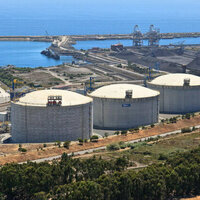


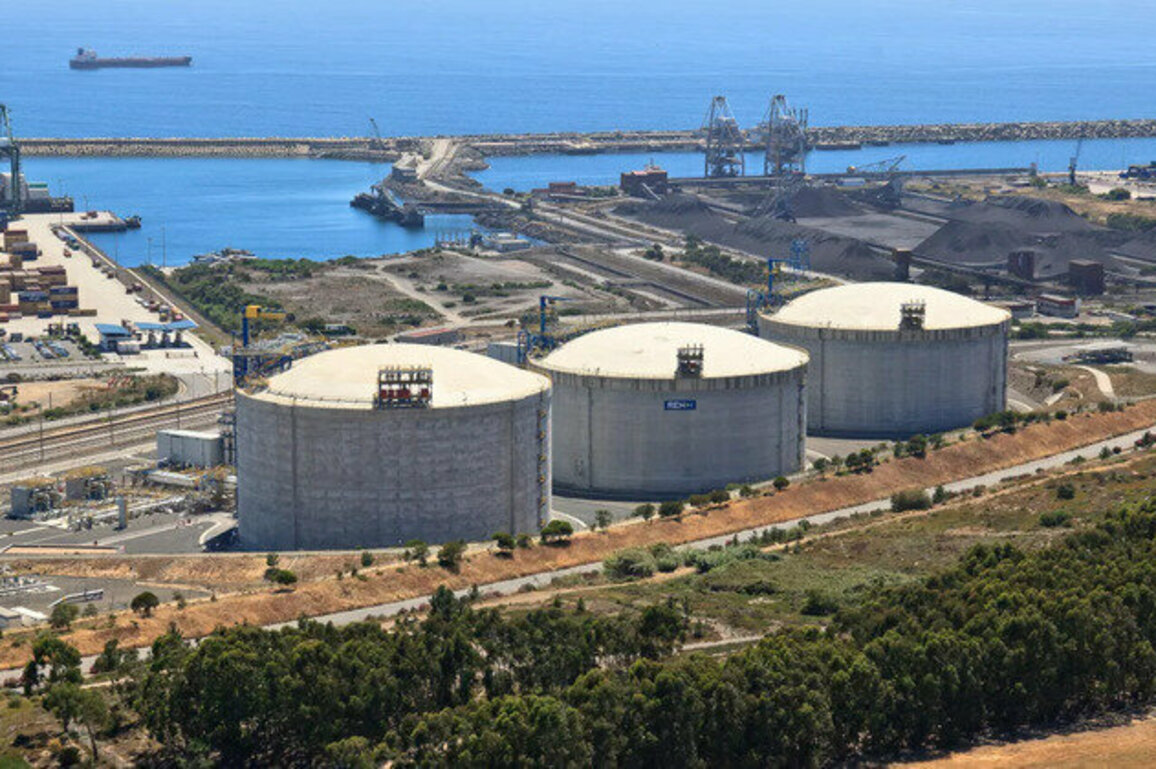
Although Donald Trump's trade wars have created a moment of opportunity for liquefied natural gas (LNG) exports to Asia, British Columbia is paying the price in the form of weakened climate regulations, higher gas prices, an overstretched electricity system, and future economic uncertainty, a new report warns.
"For the past 15 years, the development of a liquefied natural gas (LNG) industry has been a dream of B.C. politicians who have envisioned the streets of the province's economic future paved with the gold of gas exports," the Canadian Centre for Policy Alternatives (CCPA) writes. And when the new LNG Canada facility in Kitimat ships its first cargo overseas, the moment will be "fortuitous" for the province and Canada as a whole.
"LNG Canada connects gas from Western Canada-where prices are low and dependence on the U.S. high-to world market prices, largely in Asia," the report explains. "The U.S. LNG industry, meanwhile, has been slapped with tariffs by China, a key export destination for LNG Canada, as part of the broader trade war."
So in addition to two smaller LNG terminals, Woodfibre LNG and Cedar LNG, that are both in development, and a final investment decision pending on the second phase of the LNG Canada project, the trade war has both orders of government "courting additional LNG developments, and betting on their multi-billion-dollar investments to further boost Canada's export capacity to Asia."
However, "whether LNG can deliver on its promise is questionable, in light of the challenging economics of the industry-including other new LNG facilities under development-and due to the global energy transition away from fossil fuels."
The report details six major concerns with LNG development:
B.C. is weakening its already failed climate targets to make room for LNG, handing developers a two-year exemption from its industrial carbon tax that will save them tens of millions of dollars per year if it becomes permanent. "Ostensibly part of the government's response to the Trump tariffs, B.C. is fast-tracking LNG and related infrastructure projects, and is relaxing its previous requirement that LNG facilities have a plan to be net zero emissions by 2030," CCPA writes.
Powering the industry's "extremely energy intensive" LNG facilities will push the provincial grid to its limits. If the plants run on gas, they'll drive up emissions. If they're electrified, the utility will have to build new generation and transmission that would otherwise be available to support B.C.'s decarbonization efforts.
LNG producers won't commit to electrification without "substantial subsidies", with the result that "other residential and business customers will see their electricity bills go up".
LNG production in B.C. will drive up consumer prices by 25% this year compared to 2024, and by 49% in 2026, although those higher costs will initially be offset by the elimination of the consumer carbon price.
With the International Energy Agency and other agencies projecting that global gas demand is approaching its peak, LNG economics in B.C. will be "challenging due to vagaries of global markets and the high cost of liquefaction and gas pipelines."
All of these problems will worsen as more LNG production comes onstream.
"The danger is that the B.C. government abandons its climate policies for the LNG sector, including electrification and carbon pricing, and instead opts for higher GHG emissions and sacrificing its long-run GHG emission reduction targets," the report concludes. "Doubling down on fossil fuel exports at a time of climate emergency is folly and is also costly from a bottom-line perspective."
Report author and CCPA Senior Economist Marc Lee traced B.C.'s cross-party commitment to LNG development back to the former provincial Liberal government of then-premier Christy Clark, and to Clark's taunt that the opposition NDP was "the party of no" on resource development, from LNG to the controversial Site C hydropower megaproject.
"I think that really stung. So they made a decision that they weren't going to pick a fight with big industry, particularly the oil and gas industry," Lee told The Energy Mix. Instead, "they wrapped themselves in the aura of northern economic development, supporting the resource industry, trying to link Indigenous rights and issues into that conversation, and not really taking climate all that seriously."
For successive NDP governments in B.C., "the politics is more about now, about jobs and labour supporters and economic development, then on the climate stuff we can tinker a little bit here and there," he said. "Not that they don't care, but my sense is that if no one else is doing this, they're asking why B.C. should be ahead of the rest of the pack."
Those discussions make British Columbia "a microcosm of every cabinet table around the world in countries that have fossil fuel reserves," he added. The risk is that if a wealthy jurisdiction like B.C. doesn't lead, no one else will. But by seizing that lead, the province would be "doing ourselves a favour by developing capabilities and competencies and technologies that have value in other parts of the world, that position our province to be leaders in the economy of the future."
Source: The Energy Mix