


National Marine Conservation Areas
National marine conservation areas (NMCAs) aim to protect and conserve representative marine areas for the benefit, education and enjoyment of the people of Canada and the world. NMCAs offer an array of ecological, cultural, social and economic benefits.
NMCAs are designed to protect and sustain healthy marine ecosystems while supporting ongoing, ecologically sustainable use by communities and visitors. Rather than restricting access, they provide a balanced and collaborative approach that allows activities such as fishing, tourism, and recreation.
NMCAS support sustainable local economies, creating new opportunities in areas such as tourism, stewardship, and marine-based livelihoods.
Canada National Marine Conservation Areas Act
The 2002 Canada National Marine Conservation Areas Act (CNMCAA) affirms Parks Canada's role in contributing "to international efforts for the establishment of a worldwide network of representative marine protected areas". The Act also provides legal authority and the framework for establishing and managing national marine conservation areas. NMCAs are part of a growing national network of marine protected areas in the Atlantic, Arctic and Pacific oceans. The NMCA system also includes marine protected areas in the Great Lakes. Marine and freshwater NMCAs administered by Parks Canada contribute to the Government of Canada's conservation targets.
Role of the Minister of Fisheries and Fisheries and Oceans Canada in National Marine Conservation Areas (NMCAs)
Fisheries and Oceans Canada (DFO) continues to manage fisheries in NMCAs.
The Canada National Marine Conservation Areas Act affirms that the Minster of Fisheries maintains regulatory authority for fishing. The Act dictates that any provisions of an NMCA management plan (including zoning) respecting fishing and aquaculture are subject to agreement with the Minister of Fisheries and that fishing licenses continue to be issued under the Fisheries Act.
Parks Canada's Policy on the Establishment and Management of NMCAs reinforces the role of the Minister of Fisheries: "Fisheries and Oceans Canada has responsibility for fisheries management and aquaculture in NMCAs, including Indigenous fisheries."
Fisheries will continue to take place within the NMCAR.
One of the Richest Marine Environments in the World
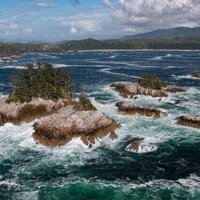
The Central Coast of British Columbia, nestled within the Great Bear Sea/Northern Shelf Bioregion, is one of the richest marine environments in the world, home to salmon, eulachon, herring, deep-sea coral, sponge reefs, whales, and other marine mammals. For millennia, the wellbeing of the Wuikinuxv, Nuxalk, Kitasoo Xai'xais, Heiltsuk, Gitxaaa and Gitga'at Nations has been, and continues to be linked to the health of this marine environment.
Establishment process and feasibility confirmed
From 2021 to 2024, the Wuikinuxv, Nuxalk, Kitasoo Xai'xais and Heiltsuk Nations (Central Coast Nations) worked together with the governments of Canada and British Columbia to determine whether establishing a national marine conservation area reserve (NMCAR) on the Central Coast was feasible, and if so, under what conditions. This assessment was informed through engagement with First Nations, coastal communities, businesses, fishing industry, and tourism sector stakeholders. Feedback was received through open houses, bilateral meetings, a public survey, and emails.
The feasibility assessment was completed in September 2024 and all partners agreed that establishing an NMCAR on the Central Coast of British Columbia is both feasible and desirable.
The Central Coast Nations are also signatory to the Great Bear Sea Project Finance for Permanence agreement (GBS) and the Mia-yaltwa Ha'lidzogm hoon is one of the listed sites in the GBS Conservation Plan.
Creation of a Collaborative Management Board
Following the signing of the Establishment Agreement, a collaborative management board will be created with representation from partnering governments.
Fisheries and Oceans Canada will continue to manage fisheries and enforce fisheries regulations within Mia-yaltwa Ha'lidzogm hoon National Marine Conservation Area Reserve and will have representation on the collaborative management board.
In addition, an advisory committee will be established spanning a range of marine sectors and interests, including commercial and recreational fisheries and the tourism sector, giving voice to stakeholders and residents, and management planning will begin. This phase will include the development of a zoning plan informed by previous planning processes and input from stakeholders and residents.
Next steps
Under the Canada National Marine Conservation Areas Act, a management plan is required for each national marine conservation area within five years of the site being designated. The plan must guide the protection, ecologically sustainable use, and management of the area. Following a similar process used in the establishment of the management plan for the Gwaii Haanas National Marine Conservation Area Reserve, the plan is guided by an advisory group and prepared in consultation with Indigenous and local communities, stakeholders, and the public, and must include objectives, zoning provisions, and measures for ecosystem protection, cultural heritage conservation, research, visitor use, and sustainable activities.
No immediate changes to fishing plans occur as a result of the establishment of the National Marine Conservation Area Reserve (NMCAR). After Parks Canada designates the NMCAR under Canada's National Marine Conservation Area Act - a process anticipated to take a number of years - Fisheries and Oceans Canada's intention is that all other fisheries, except bottom trawling, will be allowed to continue in the area according to existing rules; that changes to current rules would only be made should compelling, evidence-based reasons arise to do so and following fulsome consultation.
Over the next five years, any further changes to Fisheries and Oceans Canada's fisheries management plans will be contemplated through the Management Board's zoning recommendations process. DFO will sit on the Management Board and bring forward relevant information in relation to fishing plans and the management objectives for the NMCAR and will be involved in the consultation process. Recommendations for zoning throughout the NMCAR will be brought to each partner's respective decision-making authorities, as appropriate.
The Act also requires that management plans be tabled in Parliament and reviewed periodically to ensure that management approaches remain effective and responsive to changing environmental and social conditions.
-30-